
Dall: Create art with AI
Open in the Dall app
Transforming Videos into 3D Models: Exploring the Power of AI-Powered APIs
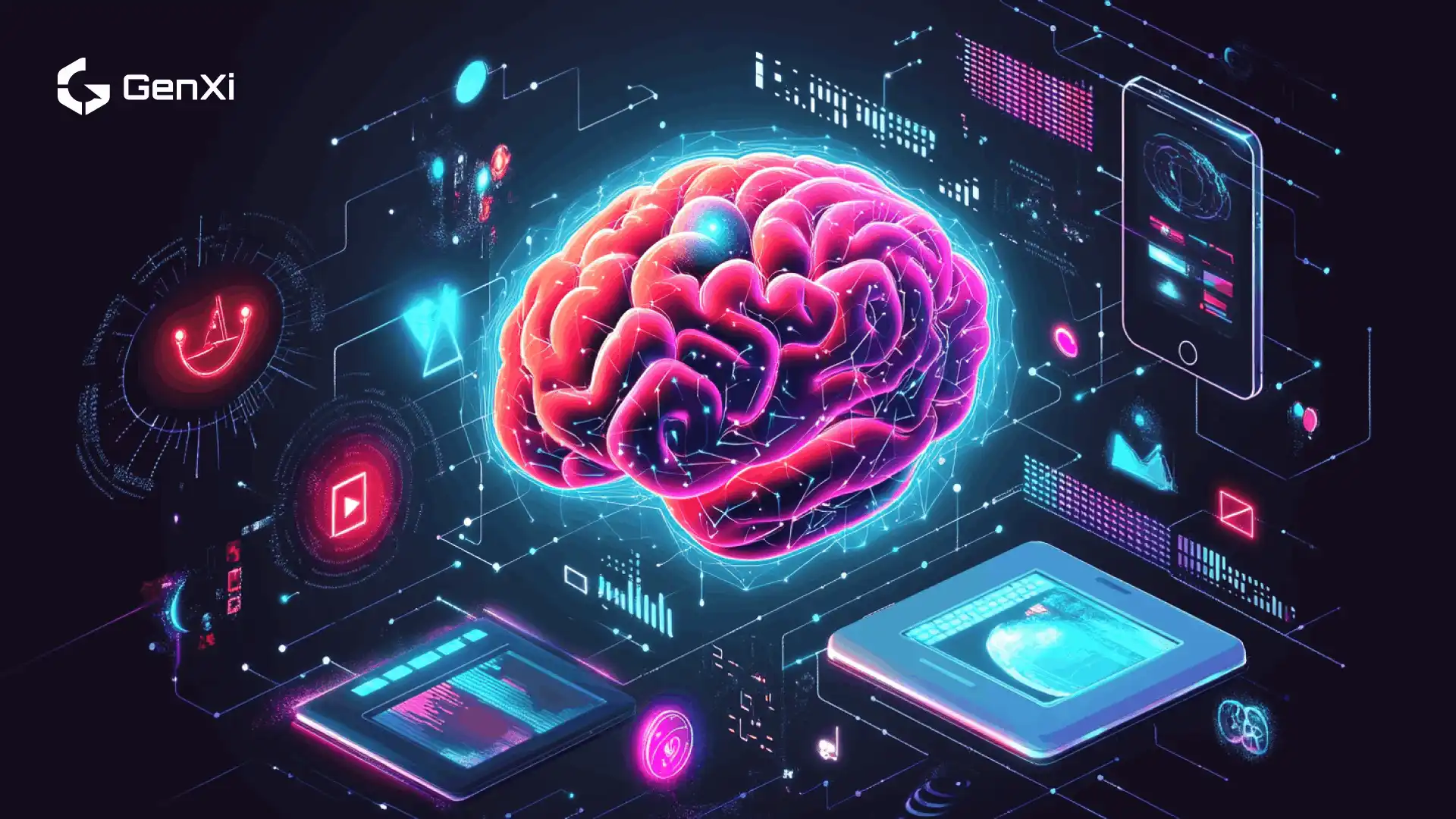
Convert Videos Into Stunning 3D Models With the Ease Of AI. This AI-Powered Api Transforms Videos Into Interactive 3D Footage. Experiences Next Level Gaming, Ar/Vr, And More.
In the ever-evolving world of technology, artificial intelligence (AI) continues to break new ground, providing innovative solutions that were once the realm of science fiction.
One of the most exciting developments of using AI to transform 2D videos into 3D models.
"Artificial intelligence is the future, not only for Russia but for all humankind. It comes with colossal opportunities, but also threats that are difficult to predict." - Vladimir Putin
What is a Video-to-3D API?
A Video-to-3D API is a set of tools and protocols that allow developers to convert 2D video footage into 3D models. These APIs leverage advanced AI algorithms to analyze video frames, detect objects, and reconstruct them in three dimensions.
The result is a dynamic and interactive 3D model that can be used in various ways.
How Does it Work?
The process typically involves the following steps:
Video Input: The API accepts video footage as input, which can be captured from various sources like cameras, drones, or existing video files.
Frame Analysis: The API analyzes each frame of the video, identifying objects, their shapes, textures, and spatial relationships.
Depth Estimation: Using advanced algorithms, the API calculates depth information for each pixel in the image, creating a depth map.
3D Model Reconstruction: Based on the depth maps and object information, the API constructs a 3D model of the scene or object.
Output: The generated 3D model can be exported in various formats, such as OBJ, FBX, or GLTF, for further use in 3D applications.

Applications of Video to 3D APIs
Gaming and VR/AR: Creating immersive environments is crucial in gaming and VR/AR. Video to 3D APIs can quickly generate realistic 3D assets from real-world footage, enhancing the realism and interactivity of virtual experiences.
Film and Animation: Filmmakers can use this technology to create detailed 3D scenes from video footage, streamlining the production process and enabling more dynamic special effects.
Architecture and Real Estate: Architects and real estate developers can transform walkthrough videos of properties into 3D models, providing clients with interactive virtual tours.
Education and Training: Educational institutions and training programs can use 3D models derived from videos to create engaging, interactive learning materials.
Healthcare: In healthcare, 3D models generated from medical imaging videos can assist in diagnostics, surgical planning, and patient education
Future Prospects
The future of video-to-3D APIs looks promising with continuous advancements in AI and computing power. We can expect more accurate and faster conversions, making 3D modeling accessible to a broader audience.
Innovations like real-time 3D reconstruction and enhanced object recognition will further expand the applications of this technology.
FAQs:
1. What kind of videos can be converted to 3D using an API?
Most video formats can be used as input. However, the quality of the output depends on the video's resolution, frame rate, lighting conditions, and the complexity of the scene.
2. What 3D formats are supported by video-to-3D APIs?
Common output formats include OBJ, FBX, and GLTF. The specific formats supported may vary depending on the API.
3. How accurate are the generated 3D models?
The accuracy of the 3D model depends on several factors, including video quality, scene complexity, and the API's algorithms. While advancements in AI have improved accuracy, there may still be limitations.
4. What is the cost of using a video to 3D API?
The cost varies by provider and usage. Some APIs offer free tiers with limited features or usage quotas, while others require a subscription or pay-per-use model for full access to advanced capabilities and higher processing limits.
5. Are there any limitations or challenges associated with video-to-3D technology?
Challenges include handling occlusions, accurately representing complex objects, and ensuring real-time performance. However, ongoing research and development are addressing these issues.

Create Stunning AI Images For Free
Type your text and GenXi will create images in seconds. no design skills needed! try it now!!

Free AI Image & Art Creation at Your Fingertips with Dall
Download Dall Now and Start Creating Stunning Visuals in Seconds—No Art Skills Required!




Follow Us:


Related Posts

▪ Mar 26, 2026
Creative AI in Art and Design: Tools Shaping Visual Innovation
Discover how AI is transforming art and design with cutting edge tools that elevate creativity and streamline workflows ...
▪ Mar 26, 2026
Transforming Creativity With AI Art and Design Innovations
Discover how AI art and design are reshaping creative boundaries, blending human imagination with cutting-edge technolog...

▪ Mar 25, 2026
Transforming Healthcare Documentation with Intelligent Document Processing
Intelligent document processing streamlines healthcare documentation by automating data extraction and enhancing accurac...
Discover the latest in AI innovation, creativity with GenXi's Newsletter
